

Introduction

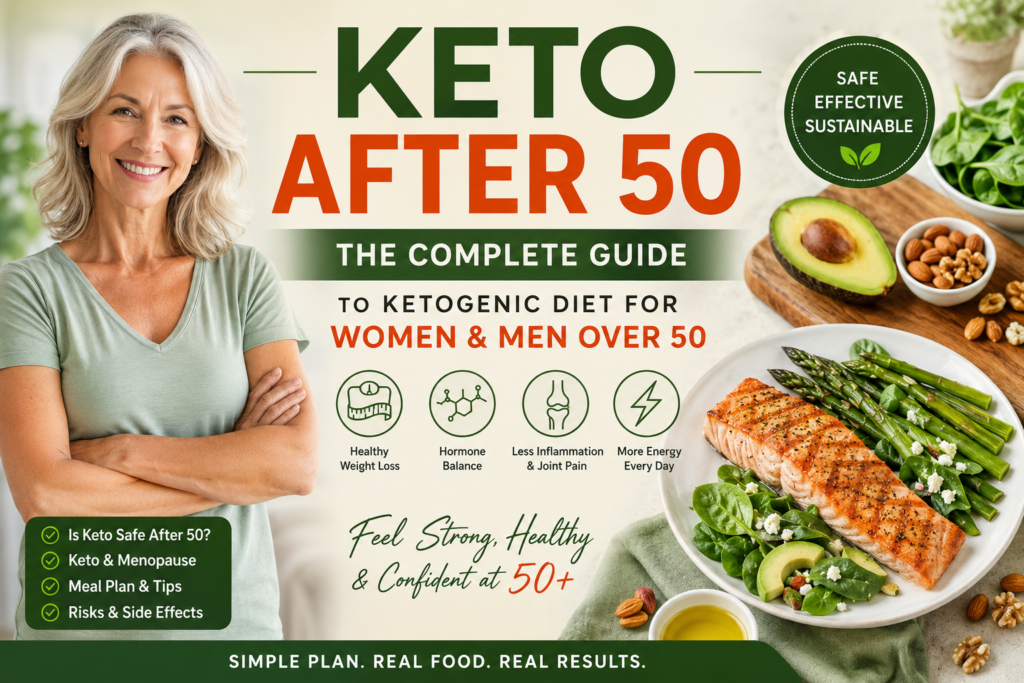
Turning 50 changes a lot about how your body handles food, weight, and energy — and if you’ve tried keto before without much luck, age might be the missing piece of the puzzle. The ketogenic diet can still be one of the most effective ways to lose weight and feel better after 50, but it works differently than it did in your 20s or 30s.
This guide breaks down exactly how keto after 50 works, what to watch out for, and how to build a simple, sustainable plan that fits your body at this stage of life.
Why Keto Works Differently After 50
As we age, several things shift that directly affect how the body responds to a low-carb, high-fat diet:
- Metabolism slows down. Muscle mass naturally declines with age, and since muscle burns more calories at rest than fat does, your body needs fewer calories than it did decades ago.
- Hormones change. For women, menopause brings a drop in estrogen that tends to shift fat storage toward the belly. For men, declining testosterone can have a similar effect.
- Insulin sensitivity often decreases. This makes it easier to store carbs as fat and harder to burn them off, which is actually one of the strongest arguments for trying keto after 50 rather than against it.
The good news: keto directly targets the mechanism behind most of these changes by lowering insulin levels and shifting the body toward burning fat for fuel instead of sugar.
Keto and Menopause: What Women Over 50 Should Know
Menopause is often the biggest hurdle for women starting keto after 50. Lower estrogen levels can cause weight gain, sleep disruption, and mood swings — and all three can make sticking to any diet harder.
Some women find that keto helps with menopause symptoms because stabilizing blood sugar reduces energy crashes and cravings. Others need to adjust their approach by:
- Increasing electrolytes (sodium, potassium, magnesium) to offset hot flashes and fatigue
- Prioritizing protein to protect muscle mass, which naturally declines during menopause
- Being patient — hormonal weight gain tends to respond more slowly than weight gained at a younger age
Keto for Men Over 50
Men over 50 dealing with stubborn belly fat often see strong results with keto, largely because lower-carb eating helps counteract the insulin resistance that becomes more common with age. Combining keto with resistance training tends to produce the best results, since maintaining muscle mass becomes more of a priority after 50 for both men and women.
Is Keto Safe After 50? Risks to Be Aware Of
Keto isn’t automatically risky after 50, but it’s worth approaching with more caution than you might have in your 30s, especially if you have existing health conditions.
Talk to a doctor first if you have:
- High blood pressure or heart disease
- Type 2 diabetes (especially if on medication)
- Kidney issues
- A history of gallstones
Common side effects to watch for:
- The “keto flu” (headaches, fatigue, irritability in the first week) tends to hit harder after 50
- Joint pain can sometimes worsen temporarily as the body adjusts to fat-burning, though many people report joint pain improving on keto long-term due to reduced inflammation
- Cholesterol changes — some people see improvements, others see a temporary rise; regular bloodwork is a good idea
A Simple Keto Meal Plan for Over 50
You don’t need a complicated plan to get started. Here’s a basic one-day framework:
- Breakfast: Scrambled eggs with spinach and avocado
- Lunch: Grilled chicken salad with olive oil dressing and feta
- Snack: A handful of almonds or a piece of cheese
- Dinner: Baked salmon with roasted broccoli and butter
Focus on whole foods, healthy fats (olive oil, avocado, nuts), and moderate protein rather than heavily processed “keto” packaged snacks — they tend to be higher in additives that aren’t necessary for the diet to work.
Tips for Long-Term Success After 50
- Prioritize protein to protect muscle mass, which becomes harder to maintain with age.
- Don’t skip electrolytes — this is the single biggest reason people quit keto in the first week.
- Pair keto with light strength training for better results and healthier aging overall.
- Track how you feel, not just the scale — energy, sleep, and joint comfort often improve before the number on the scale moves.
- Get bloodwork done every few months to monitor cholesterol and other markers.
Frequently Asked Questions
Is keto safe for people over 50? For most healthy adults, yes — but anyone with existing conditions like diabetes or heart disease should consult a doctor before starting.
Does keto help with menopause weight gain? Many women find it helps by stabilizing blood sugar and reducing cravings, though results vary and patience is key.
How long does it take to see results on keto after 50? Most people notice initial changes (energy, water weight) within the first two weeks, with more significant fat loss typically appearing over 4–8 weeks.
The Bottom Line
Keto after 50 isn’t the same experience as keto in your 20s or 30s, but that’s not a bad thing — it just means the approach needs to adapt to your body’s current needs. With the right focus on protein, electrolytes, and realistic expectations, it can be one of the most effective ways to manage weight, energy, and overall health at this stage of life.